
Pradhan Mantri Surakshit Matritva Abhiyan (PMSMA), implemented by the Ministry of Health & Family Welfare, Government of India, provides free specialist-led antenatal care services to pregnant women on the 9th of every month. Eligible women can directly visit a designated government health facility and avail comprehensive pregnancy checkups without any separate application or registration process.
Pradhan Mantri Surakshit Matritva Abhiyan Highlights | |
|---|---|
| Scheme Name | Pradhan Mantri Surakshit Matritva Abhiyan (PMSMA) |
| Launch Date | 9 June 2016 |
| Nodal Ministry | Ministry of Health & Family Welfare, Government of India |
| Objective | Ensure quality antenatal care and early identification of high-risk pregnancies |
| Service Day | 9th of every month |
| Eligibility | All pregnant women in the 2nd and 3rd trimesters |
| Services Available | Free specialist consultation, tests, ultrasound, medicines, and counselling |
| Extended PMSMA | Up to 3 additional ANC visits for high-risk pregnancies |
| Application Mode | Walk-in at designated government health facilities |
| Achievement | More than 7.5 crore pregnant women served since launch |
| Official Portal | pmsma.mohfw.gov.in |
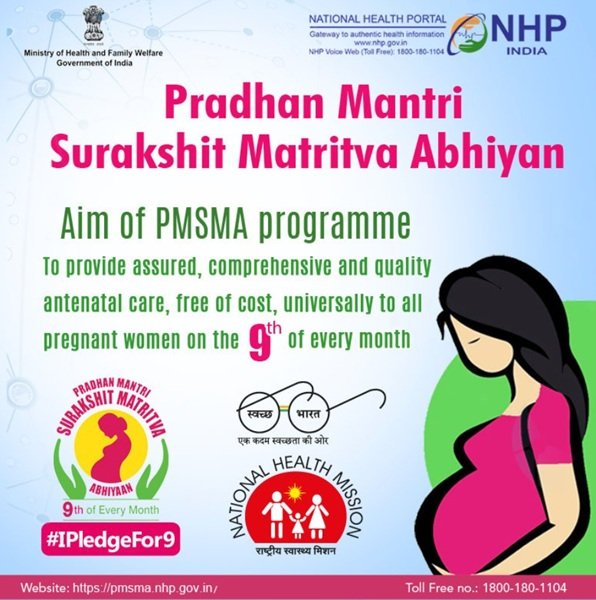
Introduction of Pradhan Mantri Surakshit Matritva Abhiyan: A Brief Insight
Many pregnant women in India miss timely specialist consultations during pregnancy due to limited access to expert care, especially in rural and underserved areas. To address this challenge, Prime Minister Narendra Modi launched Pradhan Mantri Surakshit Matritva Abhiyan (PMSMA) on 9 June 2016.
The scheme is implemented by the Ministry of Health & Family Welfare, Government of India. Its primary objective is to ensure that every pregnant woman receives at least one comprehensive antenatal checkup by a specialist, while also helping identify and manage high-risk pregnancies at an early stage.
Under PMSMA, pregnant women can avail free antenatal services on the 9th of every month at designated government health facilities. These services include clinical examinations, blood and urine investigations, ultrasound services where required, essential medicines, nutritional supplements, and pregnancy-related counselling.
Women identified with high-risk pregnancies receive additional support through Extended PMSMA, including up to three extra ANC visits, SMS-based follow-up reminders, and continuous monitoring until safe delivery. Since its launch, more than 7.5 crore pregnant women have benefited from the programme across the country.
There is no separate application process under the scheme. Pregnant women can simply visit their nearest designated government health facility with their Mother and Child Protection (MCP) Card. Those who do not already have an MCP Card can obtain one during their visit.
Pregnant women can also explore the PM Matru Vandana Yojana, which provides maternity-related financial assistance, and the Janani Suraksha Yojana, which promotes institutional deliveries through cash incentives.
Pregnant women, family members, and readers looking for more healthcare and welfare initiatives can explore our complete collection of the List of Welfare Schemes of Central Government to learn about other benefits available across India.
Benefits Provided to Eligible Beneficiaries
Pradhan Mantri Surakshit Matritva Abhiyan (PMSMA) ensures that pregnant women receive comprehensive antenatal care services completely free of cost on the 9th of every month at designated government health facilities across the country.
Complete Antenatal Care Services Under One Visit
- Detailed clinical examination by an Obstetrician & Gynaecologist or a trained medical officer
- Essential blood investigations, including haemoglobin, blood group, HIV, syphilis, hepatitis B, blood sugar, and other recommended tests
- Urine investigations for albumin, sugar, and microscopic examination
- At least one ultrasound examination to monitor fetal growth, position, and identify possible abnormalities
- Free medicines and nutritional supplements, including Iron-Folic Acid tablets, calcium supplements, tetanus vaccination, and deworming medication as per medical advice
- Personalised counselling on nutrition, anaemia prevention, institutional delivery, birth preparedness, breastfeeding, and pregnancy danger signs
Extended PMSMA Support for High-Risk Pregnancies
Since January 2022, women identified with high-risk pregnancies have been receiving additional monitoring and follow-up support under Extended PMSMA.
- Up to 3 additional antenatal care (ANC) visits beyond the routine schedule
- SMS-based reminders and alerts for both beneficiaries and ASHA workers to ensure timely follow-up
- Continuous tracking and monitoring until safe delivery of the mother and child
- Performance-based incentives for beneficiaries and ASHA workers to improve compliance with follow-up visits and medical advice
Proven Impact on Maternal Health
- More than 7.5 crore pregnant women have availed antenatal care services under PMSMA since its launch in 2016
- India’s Maternal Mortality Ratio (MMR) declined from 130 (2014-16) to 87 (2022-24), with PMSMA playing an important role alongside other maternal health initiatives in improving maternal outcomes
Eligibility Conditions Required to be Fulfilled
Pradhan Mantri Surakshit Matritva Abhiyan (PMSMA) follows a universal approach, ensuring that every pregnant woman can access quality antenatal care without any income, caste, or category-based restrictions.
- Must be a pregnant woman in her second trimester (13-27 weeks) or third trimester (28 weeks until delivery)
- Available to all pregnant women across India who visit a designated government health facility on the 9th of every month
- Pregnant women who have missed or discontinued regular antenatal check-ups are especially encouraged to avail the services under PMSMA
What Happens During the PMSMA Checkup
During the examination, doctors screen every pregnant woman for 25 identified high-risk conditions. These include medical disorders such as severe anaemia, gestational diabetes, hypertension, HIV and syphilis, previous pregnancy complications, multiple pregnancies, abnormal fetal growth patterns, and other factors that may increase the risk during pregnancy or childbirth.
Based on the findings, an appropriate risk marker is placed on the Mother and Child Protection (MCP) Card to ensure proper follow-up care.
- Green Sticker – indicates that no high-risk condition has been detected and routine antenatal monitoring can continue
- Red Sticker – indicates a high-risk pregnancy requiring closer medical supervision, additional follow-up visits, and timely referral to a higher healthcare facility for safe pregnancy management and delivery
Documents Required to be Attached
One of the biggest advantages of Pradhan Mantri Surakshit Matritva Abhiyan (PMSMA) is that pregnant women do not need to complete any separate registration process or submit a lengthy set of documents. You can simply visit a designated government health facility on the 9th of every month and avail the free antenatal check-up services.
- Mother and Child Protection (MCP) Card, if already issued during a previous antenatal visit, Anganwadi registration, or an earlier pregnancy
- Any valid identity proof, such as an Aadhaar Card, for basic verification and record maintenance at the health facility
How Beneficiaries Can Apply to Avail the Benefit of the Scheme
Getting free antenatal care under Pradhan Mantri Surakshit Matritva Abhiyan is simple. All you need to know is the correct date and the nearest government health facility. Follow the steps below to access the services without any difficulty.
Step 1: Remember the 9th of every month. This is the dedicated PMSMA day across the country. If the 9th falls on a Sunday or a public holiday, the services are provided on the next working day.
Step 2: Visit your nearest designated government health facility, such as a Primary Health Centre (PHC), Community Health Centre (CHC), Sub-District Hospital, District Hospital, or Urban Health Facility.
Step 3: Carry your Mother and Child Protection (MCP) Card if you already have one. If this is your first pregnancy checkup and you do not have an MCP Card, the health facility will issue one for you.
Step 4: Meet the doctor and complete your antenatal examination. A specialist, Obstetrician & Gynaecologist, or trained medical officer will conduct the required checkups, including clinical examination, blood tests, urine tests, and ultrasound services wherever required.
Step 5: Collect the medicines, supplements, and health advice provided during your visit. You will also receive counselling on nutrition, pregnancy care, institutional delivery, and warning signs that require medical attention.
Step 6: After your examination, the doctor will assess your pregnancy status and place a green or red sticker on your MCP Card. This helps the health team decide the level of monitoring and care you may need in the coming months.
If You’re Identified as High-Risk
Step 1: If a high-risk condition is detected, you will be enrolled for additional antenatal follow-up visits under Extended PMSMA.
Step 2: You and your assigned ASHA worker will receive SMS reminders and follow-up alerts, helping ensure that no important checkup is missed.
Step 3: Your pregnancy will be monitored closely by the health team, and timely referrals will be arranged whenever specialised care is required.
Step 4: Follow all medical advice and attend the scheduled visits until delivery, so that both mother and baby receive the care needed for a safe pregnancy outcome.
Important: You can also use the official PMSMA Portal to locate nearby facilities offering these services. Even if you have missed earlier antenatal checkups or have not been attending routine pregnancy care visits, you can still visit the next PMSMA session and receive the full range of services available under the scheme.
Important Links Available of the Scheme
- Pradhan Mantri Surakshit Matritva Abhiyan Official Portal
- PMSMA Operational Framework Official Guidelines (PDF)
- High-Risk Conditions in Pregnancy Official Guidelines (PDF)
Contact Details in Case of Help Needed
- Nodal Ministry: Ministry of Health & Family Welfare, Government of India
- PMSMA Helpline for Volunteer Doctors: 1800-180-1104
- Doctor Registration via SMS: Send “PMSMA <Name>” to 5616115
- Official PMSMA Portal: pmsma.mohfw.gov.in
- Local Assistance: Visit or contact your nearest Primary Health Centre (PHC), Community Health Centre (CHC), Sub-District Hospital, District Hospital, or other designated government health facility participating under PMSMA
Frequently Asked Questions (FAQs)
Q. What is Pradhan Mantri Surakshit Matritva Abhiyan (PMSMA)?
Ans. Pradhan Mantri Surakshit Matritva Abhiyan is a nationwide maternal healthcare initiative of the Ministry of Health & Family Welfare, Government of India, which provides free and comprehensive antenatal checkups to pregnant women on the 9th of every month at designated government health facilities.
Q. Who can avail the benefits of PMSMA?
Ans. All pregnant women in India, especially those in their second trimester (13-27 weeks) and third trimester (28 weeks until delivery), can avail the services under this scheme.
Q. What services are available during a PMSMA visit?
Ans. Pregnant women receive free clinical examinations, blood and urine investigations, ultrasound services (where required), medicines and supplements, risk assessment, and counselling related to pregnancy and safe delivery.
Q. What if the 9th of the month falls on a public holiday or Sunday?
Ans. In such cases, PMSMA services are provided on the next working day at the designated health facility.
Q. What do the green and red stickers on the MCP Card indicate?
Ans. A green sticker indicates that no high-risk condition has been identified, while a red sticker signifies a high-risk pregnancy that requires closer monitoring, follow-up visits, and specialised medical care.
Q. What is Extended PMSMA?
Ans. Extended PMSMA is an enhanced support component launched for high-risk pregnancies. It provides additional ANC visits, SMS reminders, follow-up monitoring, and continued tracking until safe delivery.
Q. Do I need to fill out an application form to avail the scheme?
Ans. No. There is no separate application process. Eligible pregnant women can directly visit a designated government health facility on PMSMA day and avail the services.
Q. Can I visit the facility if I do not have an MCP Card?
Ans. Yes. If you do not already have a Mother and Child Protection (MCP) Card, the health facility can issue one during your visit.
Q. Can private doctors participate in PMSMA?
Ans. Yes. Private-sector obstetricians, gynaecologists, radiologists, physicians, and other specialists can voluntarily contribute their services under PMSMA and register through the official platform.
Q. What impact has PMSMA made so far?
Ans. Since its launch in 2016, more than 7.5 crore pregnant women have received antenatal care services under PMSMA, making it one of India’s largest maternal healthcare initiatives.
Q. Where can I get assistance regarding PMSMA services?
Ans. You can contact your nearest Primary Health Centre (PHC), Community Health Centre (CHC), Sub-District Hospital, District Hospital, or any designated government health facility providing PMSMA services.

Tabassum is a government schemes researcher and writer with 5 years of experience tracking Central and State welfare scheme programmes across India. She has covered 500+ schemes spanning agriculture, women welfare, education, and housing, helping lakhs of beneficiaries understand their entitlements in simple language.